
Cost of Living in Memphis vs. Other Cities
Cost of Living, Memphis TN, Relocation
What Is the Cost of Living in Memphis, TN Compared to Other Cities?
Thinking about moving to Memphis, Tennessee, or simply curious how far your paycheck would stretch there compared with other U.S. cities? Memphis has a reputation as a budget‑friendly big city, but what do the numbers actually say in 2026? This guide breaks down the cost of living in Memphis and compares it with both the national average and major metros across the country.
Living Well in Memphis on Less
How the Bluff City’s costs compare to other U.S. cities
How Much Does It Cost to Live in Memphis in 2026?
Different organizations calculate cost of living in different ways, so you’ll see a range of figures. Taken together, though, they paint a clear picture: Memphis is notably more affordable than the typical U.S. city, especially when it comes to housing.
For a single person, estimates for total monthly costs in Memphis including rent generally fall between $1,900 and $2,600. Livingcost.org puts the monthly budget at about $1,917 (roughly $804 for everyday expenses and $1,113 for rent and utilities), while Wise calculates a higher, more lifestyle‑rich estimate of around $2,604 per month, with housing at $1,362, groceries at $385, dining out at $214, transportation at $50, and utilities at $206 (wise.com; livingcost.org).
Salary.com lands in the middle, estimating around $2,222 per month for a single person and $4,894 for a family of four, and notes that Memphis’s overall cost of living is about 10% below the U.S. average and 2% above the Tennessee state average (salary.com).
Cost‑of‑Living Index: Where Memphis Stands Nationally
Cost‑of‑living indexes compare cities to a national baseline of 100. Across multiple sources, Memphis consistently lands below 100, confirming its status as a relatively low‑cost metro:
CalcHubb: index of 82 (18% below national average) (calchubb.com)
AskDoss: composite index of 83 (17% below average), with housing especially low at 47 (askdoss.com)
City Affordability: index of 82.5, reinforcing the below‑average cost profile (cityaffordability.com)
Even more conservative estimates, like Ocity.org’s index of 92.5 or Homesnacks’ 93, still place Memphis about 7–10% cheaper than the typical U.S. city (ocity.org; homesnacks.com). In short, no matter whose math you use, Memphis comes out on the affordable side of the spectrum.
Housing: Memphis’s Biggest Advantage
Housing is where Memphis truly stands out. AskDoss gives Memphis a housing index of 47, which means housing costs are roughly 53% below the national average (askdoss.com). City Affordability estimates median rent for a one‑bedroom apartment at around $955 per month and about $1,179 for a two‑bedroom, with a median home price near $157,100 (cityaffordability.com).
Other sources show higher figures, especially for for‑sale homes, but the theme is the same: compared with many U.S. metros, Memphis real estate is relatively inexpensive. Redfin, for example, reports a median sale price of about $209,774 in mid‑2026, still far below the national median of roughly $398,770 (redfin.com). Zillow’s broader value index is lower, around $147,579, while some listing data, like Trading Economics’ regional figures, show higher medians above $300,000 when higher‑end properties are included (zillow.com; tradingeconomics.com).
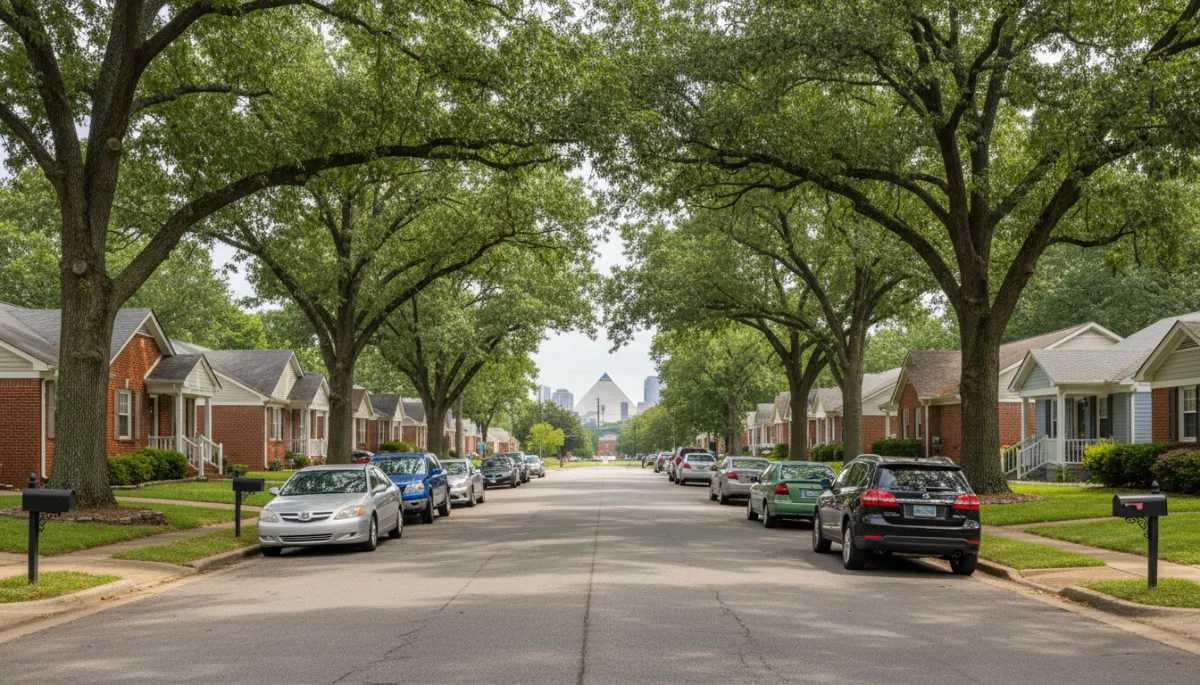
Lower home prices in Memphis allow many residents to buy rather than rent.
The variation in numbers reflects different methodologies and property segments, but the bottom line is clear: whether you are renting a modest apartment or buying a starter home, housing dollars go much further in Memphis than in most large U.S. cities. That difference is often the single biggest factor in making Memphis feel affordable day to day.
Everyday Expenses: Groceries, Utilities, and Transportation
Beyond housing, Memphis also offers modest savings on the things you buy and use every week. AskDoss estimates groceries at about 10% below the national average, utilities 10% lower, transportation 12% lower, and healthcare 13% lower (askdoss.com). Redfin’s cost‑of‑living tool suggests similar or slightly larger discounts, with utilities 16% lower, transportation 14% lower, and healthcare 19% lower than the U.S. average (redfin.com).
Numbeo’s item‑level data helps translate those percentages into real‑world prices. As of June 2026, a one‑bedroom apartment in the city center averages about $1,377 per month, or $1,142 outside the center. Utilities for an 85 m² apartment run around $183 per month, and a monthly public transit pass is about $50. A basic restaurant meal costs roughly $20, with staples like a dozen eggs at $3.22 and a loaf of bread at $3.06 (numbeo.com).
💡 Budget note: Because groceries, utilities, and transportation are all below national averages, even modest earners can usually maintain a comfortable basic lifestyle in Memphis, particularly if they avoid the priciest central neighborhoods.
Income and Affordability: Do Local Salaries Keep Up?
Low prices are only half the equation; affordability also depends on what people earn. Median household income estimates for Memphis range from about $41,000 to $51,000 per year (calchubb.com; costoflivingdata.com). Numbeo reports an average net monthly salary after tax of around $3,549, while Livingcost.org gives a similar figure of $3,719 (livingcost.org).
When you compare those incomes with typical monthly expenses of roughly $1,900–$2,600 for a single person, many residents have room in their budgets for savings, entertainment, or travel—especially if they keep housing costs on the lower side by renting outside the city center or sharing a home. For families, the picture is more varied and depends heavily on childcare, schooling choices, and healthcare needs, but the underlying cost advantage remains.
Memphis vs. Major Expensive Cities
If you’re relocating from a high‑cost metro, the difference you’ll feel in Memphis can be dramatic. Salary.com’s city comparisons show just how stark the gap is:
Compared with San Francisco, overall costs in Memphis are about 111% lower.
Versus New York City, Memphis is roughly 95% cheaper.
Compared with Boston, costs are around 70% lower.
Versus Washington, D.C., Memphis is about 59% cheaper.
Even when you look at relatively more affordable big cities like Chicago or Miami, Memphis still comes out ahead, with costs about 25–31% lower (salary.com). For many professionals, that kind of difference can mean moving from a cramped apartment and tight budget to a larger home, a yard, and more financial breathing room.
Memphis vs. Other Southern and Midwestern Cities
How does Memphis stack up against other relatively affordable metros, especially in the South and Midwest? Several comparison tools and affordability sites suggest that Memphis is still a standout value even in these lower‑cost regions.
Compared with Nashville or Atlanta, Memphis is typically 25–30% cheaper overall, largely due to lower housing costs (costliving.net).
Versus Austin, Memphis can be 35–40% more affordable, again with housing as the main driver.
Compared with “middle‑of‑the‑road” cities like Kansas City, Memphis is still about 15–20% cheaper overall.
CostSignals even lists Memphis among the most affordable major cities in the country in 2026, with costs about 15–25% below the national average, similar to places like Oklahoma City and Wichita (costsignals.com). For people who want big‑city amenities—professional sports, live music, a major airport—without big‑city prices, Memphis is a compelling option.
Big Picture: What Living in Memphis Really Costs Compared to Elsewhere
Pulling all of these numbers together, a clear pattern emerges. On average, Memphis’s overall cost of living runs about 10–17% below the national average, with some sources suggesting it could be as much as 35% lower depending on what’s measured and how (calchubb.com; costoflivingdata.com). The biggest savings come from:
Housing: roughly 50% cheaper than U.S. averages in many analyses.
Groceries and food: about 2–10% below average, depending on your habits.
Utilities, transportation, and healthcare: often 10–19% below national norms.
📌 Key takeaway: For many people, moving to Memphis feels like getting an immediate raise—without changing jobs—simply because everyday life costs less than in many comparable cities.
Is Memphis the Right Value for You?
Of course, cost of living is only one part of the decision to move. Job opportunities, schools, safety, culture, and climate all matter as well. But if you are weighing Memphis against other cities primarily on affordability, the data is straightforward: Memphis offers big‑city amenities at small‑city prices, with housing costs that are hard to match in most other major metros.
For remote workers leaving high‑cost areas, young professionals looking for a first home, or families seeking more space without sacrificing urban convenience, Memphis can deliver a significantly higher quality of life for the same income—or the same lifestyle for a lower income. Understanding how its cost of living compares to other cities is the first step in deciding whether the Bluff City might be your next home.