

Safest Neighborhoods in Memphis, TN 2026
Relocation, Memphis Neighborhoods, Safety
What Are the Safest Neighborhoods in Memphis, TN in 2026?
Memphis has long been known for its music, food, and culture—but in 2026, it’s increasingly recognized for something else: meaningful, data-backed improvements in public safety. If you’re considering a move to the Memphis area, understanding which neighborhoods and suburbs offer the strongest safety profiles is an essential first step.
Memphis Crime in 2026: A City Moving in the Right Direction
Before zooming in on specific neighborhoods, it helps to understand the bigger picture. According to the Memphis Police Department, overall Part I crime dropped by more than 40% in the first quarter of 2026, compared with the same period in 2025, and remained down about 36% through mid‑year (MPD, MPD Q2 2026). Homicides are down around 60%, aggravated assaults about 30%, and motor vehicle thefts more than 50%. The Memphis Shelby Crime Commission reports similar declines, with major violent crime down roughly 30% and property crime down more than 40% compared to 2025 (MemphisCrime.org).
These numbers don’t mean crime has disappeared—some central and western areas still experience higher rates—but they do show that safety is trending in the right direction citywide. Within that positive trend, a number of neighborhoods and suburbs stand out as especially strong choices for safety‑minded renters and homebuyers.
Safest Suburbs Around Memphis: Germantown, Collierville & Bartlett
If your top priority is safety—and you’re open to living just outside the city limits—the eastern suburbs consistently rank at the top of the list. Apartment List’s 2026 analysis of renter safety, along with rankings from Niche and other data sources, highlight three standouts:
Germantown – Regularly cited as one of the safest places in the entire Memphis metro, Germantown pairs low crime with high-performing public schools and well-kept neighborhoods. Violent crime is about 10.4 incidents per 1,000 residents, while property crime sits around 21.2 per 1,000, among the lowest in the region (Apartment List). Rents reflect that reputation: a one‑bedroom averages close to $1,964 per month.
Collierville – Slightly farther out, Collierville offers a small‑town feel with modern amenities and very low crime. Violent crime is roughly 9.1 per 1,000, and property crime about 26.3 per 1,000, with average one‑bedroom rents around $1,646. It’s a favorite for families who want top‑rated schools and a slower pace without giving up easy access to Memphis employment centers.
Bartlett – Just northeast of Memphis, Bartlett blends affordability with a strong safety record. Violent crime hovers near 16.5 per 1,000 residents, and property crime about 28.5 per 1,000, with typical one‑bedroom rents around $1,656. It’s a popular choice for those seeking a stable, community-oriented suburb without Germantown‑level prices.
💡 Tip for suburban movers: These suburbs are car-centric. If you value walkability, focus on areas near town centers, parks, and schools where sidewalks and lighting are strongest.
Safest Neighborhoods Within Memphis City Limits
For many people, living inside the city offers shorter commutes, more nightlife, and easier access to cultural attractions. If you want those benefits but still prioritize safety, several Memphis neighborhoods stand out based on 2026 crime data and independent rankings.
East Memphis & River Oaks–Kirby–Balmoral
The broader East Memphis area has long been considered one of the city’s safest bets. HomeSnacks ranks East Memphis–Colonial–Yorkshire as the safest neighborhood in Memphis for 2026, using FBI Uniform Crime Reporting data (HomeSnacks). Areavibes adds that the River Oaks–Kirby–Balmoral portion of East Memphis experiences about 5,836 crimes per 100,000 residents—roughly 38% less crime than the city average (Areavibes).
Within this broader zone, River Oaks is especially popular with renters. Apartment List estimates about 17 violent crimes and 33 property crimes per 1,000 residents, with average one‑bedroom rents around $1,391. The area offers mature trees, established homes, and convenient access to major employers and shopping, all while maintaining a calmer, more residential feel than downtown.
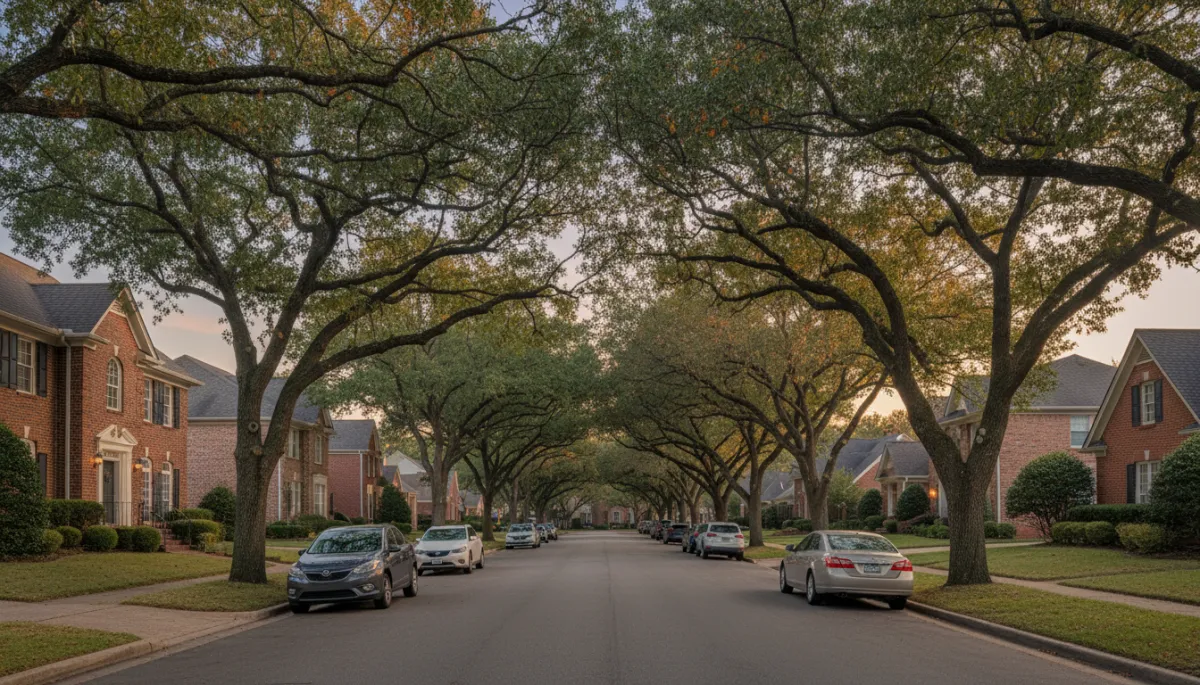
East Memphis blends lower crime with mature neighborhoods and easy access to city amenities.
Cordova–Appling & Countrywood
Moving northeast, the Cordova–Appling area offers a compelling mix of newer housing, shopping centers, and relatively low crime for an in‑city location. Areavibes reports roughly 4,088 crimes per 100,000 residents here—about 57% less crime than the Memphis average. This makes it one of the city’s strongest large neighborhoods from a safety perspective.
Within this corridor, Countrywood is often cited as a budget‑friendly, family‑oriented pocket. Estimated violent crime is around 21 incidents per 1,000 residents, with property crime near 27 per 1,000, and average one‑bedroom rent hovering around $1,133 (Apartment List). If you want a quieter, suburban feel without officially leaving Memphis, Countrywood and surrounding Cordova neighborhoods are worth a close look.
Mud Island: Scenic and Relatively Secluded
Mud Island, a narrow strip of land in the Mississippi River just north of downtown, has a unique layout that naturally limits through‑traffic. That geography, combined with active community engagement, contributes to lower crime than many central neighborhoods. Apartment List estimates violent crime at about 22 per 1,000 and property crime roughly 31 per 1,000, with average one‑bedroom rents near $1,604.
Residents are drawn to the river views, parks, and proximity to downtown while still enjoying a quieter, more contained environment. For professionals who work in the city center but want a neighborhood that feels a bit more tucked away, Mud Island is a strong contender.
Smaller Safe Pockets: Davies Plantation, Buckhead Acres & More
Beyond the major suburbs and large city neighborhoods, several smaller pockets earn A+ safety grades on independent crime maps in 2026. These areas may not be household names, but they are worth knowing if you’re searching by ZIP code or specific subdivisions.
Davies Plantation – Located in the Bartlett area, this community shows very low crime rates and a median household income above $150,000 (DoorProfit). Higher incomes often correlate with stronger tax bases, better‑resourced schools, and more active homeowner associations—all of which support safety.
Buckhead Acres – Another high‑income enclave with a median around $142,000, Buckhead Acres consistently earns top safety marks (DoorProfit, MemphisCrimes.com). It’s a good example of how stable ownership and neighborhood engagement can reinforce already low crime levels.
Cherry Valley, Burloe, Birdsong Estates, Bartlett Grove, Easthill – These smaller subdivisions and clusters, many in or near Bartlett, also show A‑range safety scores on crime maps. They may not appear on every national ranking, but local data suggests they perform very well on day‑to‑day safety.
📌 Key takeaway: In the Memphis area, neighborhoods with higher median incomes and strong homeowner presence—like Davies Plantation and Buckhead Acres—tend to have the lowest crime rates.
Why Safety Is Improving—and Why Local Data Still Matters
The safety gains across Memphis aren’t accidental. Initiatives like the Memphis Safe Task Force, which surpassed 10,000 arrests and removed more than 1,700 firearms by mid‑2026, along with expanded surveillance tools and targeted enforcement, have all contributed to the downward trend in crime (U.S. Marshals, MPD 2025 report). Neighborhood Watch programs are also growing, with hundreds of new participants joining in 2026, helping residents and police work together more effectively.
At the same time, crime can vary dramatically from one block to the next. Even in generally safe neighborhoods, certain intersections, apartment complexes, or commercial strips may see more incidents than surrounding streets. That’s why, once you’ve narrowed your search to a few of the safest neighborhoods, it’s wise to:
Check interactive crime maps such as MemphisCrimes.com for address‑level data.
Visit at different times of day and week to get a feel for activity, lighting, and noise.
Talk with neighbors, local business owners, or property managers about recent trends and community efforts.
Matching Neighborhoods to Your Lifestyle
Every safe neighborhood has its own personality. To choose the right fit, think about how you live day to day—not just the crime statistics. Here’s a quick way to align your priorities with the safest areas in and around Memphis:
Maximum safety and family focus: Look first at Germantown and Collierville. Both combine low crime, strong schools, and a wealth of parks and youth activities—ideal if you’re raising children and commuting by car.
Balanced affordability and security: Consider Bartlett, Countrywood, or Cordova–Appling. You’ll typically find more space for your money while still enjoying significantly lower crime than the city average.
Urban living with safer stats: Focus on East Memphis–Colonial–Yorkshire, River Oaks–Kirby–Balmoral, or Mud Island. These areas keep you close to major employers, hospitals, and cultural attractions while still ranking among the city’s safest neighborhoods.
Quiet enclaves with top safety grades: If you prefer a tucked‑away subdivision feel, explore listings in Davies Plantation, Buckhead Acres, Cherry Valley, Burloe, Birdsong Estates, Bartlett Grove, and Easthill.
Final Thoughts: Memphis Safety Is Changing—Use the Data to Your Advantage
Memphis in 2026 is not the same city you might remember from older headlines. With major violent crime down around 30–36% and overall Part I crime falling more than 40% year over year, the city is in the midst of a genuine public‑safety turnaround. Within that broader improvement, a number of neighborhoods and suburbs—Germantown, Collierville, Bartlett, East Memphis, River Oaks, Cordova–Appling, Mud Island, Davies Plantation, Buckhead Acres, and others—consistently emerge as some of the safest places to live in the Memphis area.
Still, safety is personal. The right neighborhood for you will depend on your budget, commute, school preferences, and lifestyle. Use the latest crime data as a starting point, then layer in your own on‑the‑ground impressions. Walk the streets, visit at night, talk with locals, and pay attention to details like lighting, upkeep, and community activity. When you combine those impressions with the encouraging 2026 statistics, you’ll be well‑positioned to choose a Memphis neighborhood that feels not just safer on paper—but genuinely comfortable and secure in daily life.